
Table des matières
Introduction
The Covid-19 started in the end of 2019 is still running and has already caused important damages to human lives and the global economy. Economies had not before witnessed a disruption as great in both its scope and duration as disruption entailed by COVID-19 pandemic since post- 2nd world War (Winkler, 2021). The International Monetary Fund announced a forecast of 4.5% and 3.9% economic recession by the end of 2021 and 2022 as the effects of the crisis (Boulitama et al., 2021).
According to some authors, the potential short- and long-term pandemic’s damage in terms of human life and economic activity is incalculable (Kumar & Chandra, 2010). COVID-19 Pandemic is an unprecedented crisis that has revealed the importance of logistics and supply chain management. It has also demonstrated that global supply chain lacks resilience and is vulnerable (Anker, 2021). This crisis first related to health affected the global economy through logistics channel by producing disruptions in the supply chain (Hobbs, 2020; Kumar et Mishra, 2020). The global supply chain has been affected because economies are interconnected more than before due to drivers such as globalization, outsourcing.
Covid-19 is not the first crisis which challenged the tools, methods, approaches, and strategies of management of goods and services flow and men’s mobility. But one of its specificities is that it has a global scope, and its consequences are of indefinite importance, as the crisis is still going on.
The solution to that crisis is to be searched on two levels: on the sanitary level (serum and vaccine) which is out of the scope of this paper, and on the logistics level. The central role of logistics and supply chain management operations during epidemics and pandemics is recognized indisputable by governments (Costa et Peixoto, 2020) and worldwide non- governmental organizations such as the World Health Organization (World Health Organization, 2012). The same way vaccines sharing is important to stem the pandemic and limit its consequences, sharing logistics solutions developed and experienced elsewhere would be important to help companies and organizations cope with the lasting actual pandemic and future ones. Authors who conducted review researches (Chowdhury et al., 2021; Kumar et Chandra, 2010; Natarajarathinam et al., 2009) sustain somehow this thought by presenting extent preparedness and response strategies to supply chain disruption due to pandemics like Covid-19.
This paper pursues the same purpose but with a particular focus on experience in response to the following research question: what are the tested effective or ineffective solutions around the world in dealing with logistics and supply chain problems caused by pandemics?
The answer to this question requires first answering to another: what are logistics and supply chain problems caused by pandemics?
On the subject of outbreaks, Dmitry Ivanov (2020) mentioned that humanitarian Supply Chains (SCs) problems are more mastered than commercial SCs. Humanitarian logistics linked to epidemic outbreaks has a mature literature unlike the topic of commercial SCs related to epidemic outbreaks. This paper attempts to fill this gap by focusing on business aspects of logistics and SC.
The literature review on that topic by Chowdhury et al. (2021) reveals a lack of empirically designed and theoretically grounded studies. Taking these limits into account, a particular attention is given in this paper to empirical studies, with the aim of sharing concrete solutions from around the world to logistics and SC issues related to pandemics.
The overall purpose of this article is to provide lessons from around the world about handling Covid-19 and similar crises. To attain this, it will specifically:
- Describe the main logistical and supply chain features of covid-19 and similar crises.
- Identify ready-to-use solutions proven effective around the world for managers.
- Identify avenues for technological or managerial innovation opened by logistics and supply chain problems resulting from the current Covid pandemic.
In accordance with this purpose, it seems suitable to conduct a comprehensive literature review. Relevant articles will be selected through a systematic search performed on the Web of Science and Google Scholar platforms.
The remainder of this paper is as following: in section 2, the theoretical framework of this research is laid down. The third section describes the main logistical features of covid-19 and similar crises. The fourth section presents the approach adopted to conduct the comprehensive literature review presented in section 5. The sixth section that preceding the conclusion presents an analytical synthesis of the multiple solutions developed and employed in the world in response to Covid-19 and similar crises and suggests lessons that can be learned.
Theoretical framework
Although Covid-19 is initially a health crisis, it can be qualified as a crisis of logistics in the economic level since the negative economic consequences of the Covid-19 lie upon logistical shortcomings. In Anker’s sense, “it is beyond doubt that supply chains are vital to the understanding of the pandemic and how governments and businesses respond” (Anker, 2021, p. 173). On their side, Paul and Venkateswaran (2020) recognize the key role logistics / SC play in epidemic outbreaks control, arguing that they can influence the duration of an epidemic.
The spread of the virus and the ripple effect of its economic consequences would be mitigated or avoided if the current level of logistics development could afford it. Sharma et al. (2020) declared that “for many countries and many firms, the inability to respond to the Covid- 19 outbreak lies in its supply-chain” (Sharma et al., 2020). That is the reason why the search for new logistics solutions has been, since the beginning of the crisis, the main way to ensure the continuity of economic activities (He et al., 2021; Sarkis, 2020). Before studying in detail the different logistics solutions developed or adopted in the world to manage Covid-19 and similar crises, conceptual foundations about logistics, supply chain and risk management will be laid down.
To define the key concepts, we retain that “a crisis is an abnormal situation which presents some extraordinary, high risk to business and which will develop into a business unless carefully managed” (Ibrahim et al., 2003). It entails instability and requires specific management to return to a normal course of activity. Crises share certain common characteristics (Boulitama et al., 2021; Chartier et Landry, 2010; Evans et Elphick, 2005) such as : uncertainty and complexity; time pressure and the duration of the situation (exhaustion of men); decisions taken in a hurry; emergency plans overwhelmed by the scale of the situation; implementation of significant emergency resources; an alteration of the cognitive capacities of the managers due to the stress generated by the situation; unusual triggering events causing a feeling of surprise.
According to what is said above, a supply chain is considered to be in crisis when the activities of one or more chain links are interrupted and that entails major disruption of the normal flow of goods and services within the supply chain (Natarajarathinam et al., 2009).
Many problems can arise in a supply chain. Chopra & Sodhi (2004) provided a list of categories of risks with the events and conditions that drive each one of them. There are risks of: disruptions, Delays, Systems, Forecast, Intellectual Property, Procurement, Receivables, Inventory, Capacity. According to the literature, Supply chain risks can be divided into operational risks and disruption risks (Xu et al., 2020). Operational risks are daily issues such as lead-time and demand fluctuations, but disruption risks are classified as “low-frequency- high-impact events” (Chopra et Sodhi, 2004; Natarajarathinam et al., 2009). They have a lower frequency but a higher impact on supply chain functioning. Disruptions are irregular material flow generally caused by unpredictable and rare events such as: natural disasters (earthquake, Factory fire, tsunamis), labor dispute (staff strike), Supplier bankruptcy, war / terrorism or other man-made catastrophes (e.g. Chernobyl nuclear disaster in 1986), dependency on a single source of supply as well as the capacity and responsiveness of alternative suppliers. Natural disasters and crises cause both logistical issues (operational or local scale) and particularly supply chain resilience (SCRE) issues because organizations are linked worldwide. That is why supply chain risks management (SCRM) is central in dealing with economic consequences of pandemics.
The concept of Supply Chain Resilience refers to “the adaptive capability of the supply chain to prepare for unexpected events, respond to disruptions, and recover from them by maintaining continuity of operations at the desired level of connectedness and control over structure and function” (Ponomarov & Holcomb, 2013). In other terms, it is “the ability of a supply chain to both resist disruptions and recover operational capability after disruptions occur” (Melnyk et al., 2014). Supply chain risk management makes the supply chain more resilient, more “able to prepare, respond and recover from disturbances and afterwards maintain a positive steady state operation in an acceptable cost and time” (Ribeiro & Barbosa- povoa, 2018). Building SCRE consists in developing four main abilities, namely: monitoring ability, anticipation ability, responding ability, learning ability (Hollnagel, 2017). Supply chain risk management, seen as a process, involves the “identification, assessment, treatment, and monitoring of supply chain risks, with the aid of the internal implementation of tools, techniques, and strategies and of external coordination and collaboration with supply chain members so as to reduce vulnerability and ensure continuity coupled with profitability, leading to competitive advantage” (Fan & Stevenson, 2018) and (ISO, 2009).
In summary, the two concepts are close; the current literature does not clearly mention their difference. The two concepts are circular in terms of influence “while SCRM is indicated as most pronounced enabler of SCRE, SCRE plays an important part of SCRM” (Demirci, 2021). Actions, tools, techniques, approaches used in building SCRE and those in SCRM are generally the same (Simba et al., 2017) or supplement each other as tool to minimize threats against the proper functioning of the supply chain (Kamalahmadi et Parast, 2016; Oguzhan et Erol, 2016). The noticeable difference that appears throughout the diverse definitions is that: we will talk about building resilience when actions are taken in anticipation, strategically in time of stability and normal functioning of the Supply Chain. These are investment actions that structurally affect the supply chain. But we talk about Supply chain risk management when actions are taken in response to a foreseeable or imminent risk or to an ongoing crisis. Supply chain risk management therefore contributes to the resilience of the SC by improving downstream its ability to recover and stabilize after the occurrence of a crisis (Kamalahmadi et Parast, 2016; Singh et al., 2019). This little difference is highlighted by the authors who argued that the CRE should be built in two phases: proactive and reactive (Conz et Magnani, 2020; Norrman et Wieland, 2020; Simba et al., 2017; Sreedevi et Saranga, 2017; Wieland et Wallenburg, 2012). Proactive is about anticipating and preventing risks by having contingency plans (Ribeiro et Barbosa-povoa, 2018); while reactive is more focused on responding and recovering from risks
(Kamalahmadi et Parast, 2016).
A recent literature review about supply chain risk management (248 articles analysis) conducted by Oliveira et al. (2017) led them to state that a majority of the articles do not teach readers how to conduct SCRM. That statement highlights the necessity and the importance of the current research which aims to present tools, techniques, approaches, and procedures used to identify, assess, mitigate, and monitor the risks to supply chains in times of crisis. Natural disasters and crises have become more repetitive (Natarajarathinam et al., 2009) during the last decades and have made the world more unpredictable and unstable (Demirci, 2021). The World Health Organization (WHO) reported 1438 epidemics just between 2011 and 2018 (Hudecheck et al., 2020). That increases the interest of search for the different ways of dealing with crises especially Covid-19 and similar crises known as epidemics/pandemics.
Logistical features of Covid-19 and similar crises
In this part of the paper, main characteristics that make Covid-19 and similar crises particularly extraordinary are described. Epidemics outbreak is a specific driver of Supply chain disruptions. It is seen as “an unique type of SC disruption risks” (Ivanov, 2020). That uniqueness resides in three main points: (i) a long-term disruption existence and its unpredictable scaling, (ii) a simultaneous disruption propagation in the SC (i.e., the ripple effect) and in the population (i.e., pandemic propagation), (iii) a simultaneous disruption in supply side, demand side and logistics infrastructures. Epidemics and pandemics start small, scale fast and disperse over many regions causing disruptions in the global supply chain. Their geographic scale of impact is generally larger than other types of crisis such as natural disasters, war or terrorism. Dmitry Ivanov & Das (2020) affirm that “in contrast to geographically centered [natural / industrial disasters], a pandemic is not limited to a particular region or confined to a particular time period” (Ivanov and Das, 2020).
In regard of this distinctive characteristic, natural disasters, war, and terrorism are excluded from the study not only because of their geographic border but also because of the above criteria that clearly differentiate them from epidemics and pandemics.
Furthermore, it can be noted that epidemics and pandemics entail disruptions in supply chains internally (e.g. worker illness) and externally (e.g. supply shortages, demand increases) (Golan et al., 2020). These disruptions affect sequentially or concurrently several links or components of supply chain (suppliers, transportation, distribution and customers) (Golan et al., 2020; Ivanov et Das, 2020; Kumar et Chandra, 2010). They affect both demand side and supply side of the supply chain (Hobbs, 2020). On demand side: panic buying by consumers leading to empty shelves in supermarkets (Hobbs, 2020); panic stockpiling on food, water and supplies (Kohn et al., 2012), that may lead to the bullwhip effect (Mussell et al., 2020). Pandemics create uncertainty and volatility in consumer demand (Vo et Thiel, 2006). These behaviors raise suddenly the demand while the production and transportation are vulnerable in time of crisis, leading to more potential shortages. Supply side potential shocks concern disruptions in transportation, cross-border disruptions and labor shortages due to worker illness, movement restrictions or self-isolation (Golan et al., 2020; Hobbs, 2020).
These common characteristics of epidemics and pandemics can be found in the particular cases of Covid-19 and similar crises. Studying their spread and logistical impact helps to realize the necessity to solve the crisis. Wong et al. (2015) provided examples of epidemic outbreaks which affected supply chains: SARS, MERS, Ebola, Swine flu; to that list is added coronavirus Covid-19, the current one. Covid-19 pandemic is an outbreak of planetary scope which has affected the global supply chain resilience (Queiroz et al., 2020). The first case of Covid-19 illness appeared on 31 December 2019 in Wuhan, China. The illness spread and touched the whole world (about 71 over 73 countries). On first October 2021 the dashboard of the WHO reports 233,503,524 confirmed cases of Covid-19, including 4,777,503 deaths. Some declare that the Covid-19 outbreak is one of the biggest disruptions during the last decade which is “breaking many global supply chains” (Araz et al., 2020). It is an unprecedented shock that impacts supply side, operations as well as demand side of food supply chains (Demirci, 2021). For full details of Covid-19’s impact, we invite readers to a recent systematic literature review conducted by Chowdhury et al., (2021) and Queiroz et al., (2020).
A research in Morocco noticed that Covid-19 caused an increase of the unemployment rate from 9,4% to 12,7% between the third trimester 2019 and the third 2020 (Boulitama et al., 2021). The empirical research by Boulitama et al. (2021) revealed that only 33% of the sample companies have maintained their business, the remainder was obliged to stop it partially (45%) or entirely (22%). All the logistics processes have been negatively affected by the crisis: sourcing 27% of companies, Transport 18%, purchase 17%, Distribution, 17%, production 13% and warehousing 8%. Supply chain disruptions started mainly from Transport disturbance 49%, supplier Bankruptcy 31%, lack of human resources 19%. In human resources management point of view, the percentages of companies that have adopted telecommuting or have made reduction of working time or redundancies are established respectively at 45%, 29%, 21%.
According to extant studies, these same supply chain effects occurred elsewhere in the world: in Dutch (Demirci, 2021); in Germany (Burgos et Ivanov, 2021). The similar crises which occurred in the world the last decades have been reported to have similar effects (Influenza, Cholera, Ebola; Malaria, Smallpox (Queiroz et al., 2020). It was the case of the Avian flu pandemic started in Hong Kong in 1997 which spread in more than a dozen countries in Asia, Africa, the Pacific, Europe, and the Near East (Savachkin et Uribe, 2012). The H5N1 pandemic is very broad as the virus can mutate and cause death in humans. It was also the case of Ebola virus outbreak in 2014 having affected West African countries and caused food supply chains shutdown because of a shortage of workers and production and trade reductions. Ebola virus spread has negatively impacted the global logistics (British Standards Institution, 2014). Severe acute respiratory syndrome (SARS) surfaced in China in November 2002 impacted the global logistics (British Standards Institution, 2014). SARS has adversely affected the airline
industry, many flights have been suspended (Chou et al., 2004; Johanis, 2007). Its impact on the global SCs is of a same nature than Covid-19 but relatively low because the globalization degree and the role of China in the global SCs at the times of SARS were lower than nowadays.
Methodology
The scientific approach used to select references for this literature review has been the “Preferred Reporting Items for Systematic Reviews and Meta-Analysis” (PRISMA) of Moher et al. (2009) already employed in numerous review papers (Illahi et Mir, 2021).
The PRISMA approach is displayed in four steps. The first step consists in documents search from the databases. At that step, Web of Sciences and Scholar Google were used to search for the literature using the keywords “Outbreak” And “logistics”. As the topic of pandemics/epidemic is so vast we applied the following filters to the outcomes: Year, Article type, Subject area, Sorted by relevance. The second step consists in reading titles and abstracts to select relevant references from the results found in the previous step. In the third step the documents found relevant in the second step are checked in detail for relevance and appropriateness. Here, full text is read, and only case-based or empirical studies were retained and used. The last step concerns critical review. Documents selected in step 3 are read and confronted each other to bring out relevant insights. On Web of Science side, the procedure summed up with 43 relevant articles in step 3 and 15 in step 4.
But the other side, Scholar Google engine could just short results by relevance and by year. In step 1, we ended the reading titles selection up to the 12th, since we were not able to find a relevant article from the 13th to the 15th page, we considered that we would no longer find relevant articles. From this parallel search, supplementary articles have been added after eliminating duplicate and reading full text step. From both platforms, we obtained 17 usable articles whose main findings are presented below. Figure 1 presents the methodology process, step by step and the outcomes at each step.
Literature review
Theory of performance stipules that value is yielded using resources. In logistics performance, Kabore & Bourma (2019) have proposed a conceptual model composed by 4 sources of logistics performance which are: principles, managerial methods (strategies and approaches), practices, and tools. In other terms, creating value or solving problem in logistics and supply chain involves the design and use or adoption of one of these resources or a combination of one with other. This categorization of resources is done based on abstraction degree (from the most -principles- to the less abstracted source –tools) and will be used as the framework to present the different solutions (tools, practices, and strategies/approaches) found in the literature in response to logistics issues created by pandemics/Epidemics. An advantage of presenting the solutions as tools, practices or strategies is that practitioners and decision- makers will be able to exploit the findings more easily. Knowing that the tools and practices are solutions generally more specific to business sector than managerial strategies or methods.
- Response strategies and practices to logistics and SC issues arising from pandemics
- Solutions classified as strategy fall under action plans and decisions. Ditto for solutions considered « practices ». Faced with logistics and SC issues caused by epidemics/pandemics (refer to section 3), companies made and applied action plans. Researchers report diversified solutions according to the cases. Boulitama et al., (2021) carried out research on 196 Moroccan companies distributed as follows: 62% of the secondary sector, 37% of the tertiary sector and 1% of the primary sector. This study reports that digitalization has been a solution to adapt to the constraints generated by the Covid-19 outbreak. 32% of the sample companies introduced
integrated management systems, 20% of them switched to dematerialization (digitization) of documents, while 15% of them have adopted barcode systems to regulate flows and data. The authors mentioned that the digitalization of the economy concerned 33% of supply and 22% of online sales and payment and teleworking. To face labor shortage risen from the outbreak, the study revealed that companies took paths that distribute them in four clusters. The path of reduction of working time – teleworking – redundancy has been taken by companies which encountered problem in the downstream of their supply chain. Those which have experienced trouble in the upstream side of their supply chain have taken the following path: telecommuting
- Reduction of working time – redundancy. The cluster of companies which encountered problems in the processes of supply logistics and production logistics have followed the path: telecommuting – Redundancy – reduction of working time.
Another cross-industrial research is one of Moonen (2020) who conducted a case study of four companies. But unlike Boulitama et al. (2021), that author studied how a specific strategy “developing preferred customership”, impacted the logistics resilience of companies in time of pandemics. Preferred customership proved to be of great importance during COVID-19 pandemic. As a reward of being preferred customer in time of crisis, there are: favorable pricing behavior from the supplier (Schiele et al., 2011), a preferential supply in case of shortages (Schiele et al., 2011; Vos & Dewulf, 2015), improved product quality, a supplier might be willing to share innovations and ideas to which competitors of the customer do not have access (Schiele, 2012), the determination of the supplier to continue the relationship and to recommend the organization. Purchasers in these cases study acted on the following factors to maintain and develop preferred customer status during Covid-19 pandemic: openness, communication, honesty, delivery reliability, loyalty, and continuity, understanding and Trust, to maintain the preferred customer status. Cases companies recommend particularly two options they choose in Covid-19 time: 1) showing understanding to their suppliers and not criticizing them when problems on the supplier side occur, 2) openness and transparency relate to changes in costs and margins. The partners must not be satisfied with explaining the problems (delay, price rise, etc.) which arise by saying “it is due to the crisis” but must be more open and communicate enough on the real causes of problems.
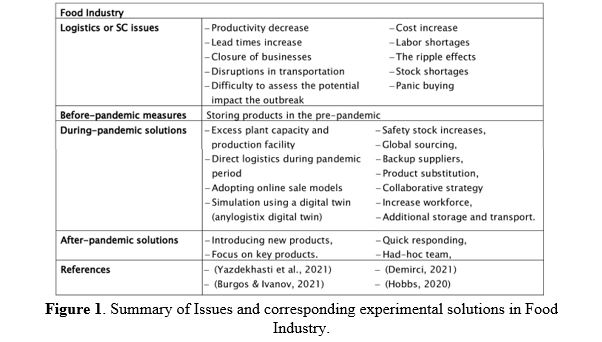
Unlike multi-case researches presented above and having interest with logistics issues of companies taken individually, the research by Demirci (2021) focused on supply chain. He studied a 3-link supply chain of a company in Dutch food retail context (suppliers, Distribution center and Supermarkets). In this SC, no partner had a concrete plans and preventive forecasts to anticipate adequately before the disruptions occurred. Both downstream and upstream supply chain partners did not act proactively (“redundancy” and “resourcefulness”) before the coronavirus crisis. All the partners responded to the crisis reactively. During the crisis, they applied adaptive/absorptive strategies such as: – safety stock increases, – additional storage and transport, – rerouting, – global sourcing, – small batch trade, – increase personnel, – technological availability, – backup suppliers, – product substitution, – Excess plant capacity and production facility. The SCRM after-corona virus crisis in this SC have been done through reactive strategies (“flexibility” and “agility”). Actions that have been undertaken to deal with crisis at that phase were: – quick responding, – corona crisis team, – introduce new products, – focus on key products, – responsive suppliers. Demirci (2021) noted that the case supply chain has been resilient, although its partners did not balance between proactive and reactive strategies to cope with the outbreak. The success of this SC could be attributed to the fact that strategies, at all levels of the supply chain, matched well and to the adoption of collaborative approach. All the SC partners applied reactive strategies. The author states that the partners could prevent additional costs, waste and the ripple effect observed in the SC if they had added proactive approach to their strategies. Adoption of collaborative strategy has been revealing an important factor to improve the SCRE of the case study. The experience of that SC teaches the following lessons: 1) contingency plans are necessary to improve supply chain resilience. They are strategies created to limit risks before a disruption occurred and executed during the disruption (Conz et Magnani, 2020; Pavlov et al., 2019); 2) reducing dependency from upstream supply chain partners is necessary to ensure continual delivery to downstream partners. That can be made through multiple sourcing and keeping safety stocks; 3) abandon of cost-efficiency strategies in favor of collaborative strategies during pandemics (Hobbs, 2020). Companies should focus themselves on meeting customer demand and collaborating with supply chain partners to ensure the continuation of products flow.
Previously to Demirci (2021), Hobbs (2020) conducted a research in the same industry but with a larger scope (Canadian Food SC) and oriented to the long term impact of Covid-19. He mentioned online grocery delivery services as a preferred and an up-growing solution of shopping during the crisis. The author predicts that online grocery solution could balance with previous shopping methods after Covid-19. The effectiveness of that practice /strategy is consistent with the finding of an analytic study by He et al., (2021), in Brick-and-Mortar (B & M) retailers sector in Pennsylvania. They studied how local Brick-and-Mortar (B&M) retailers can offer delivery service. Two online retailing mode were considered: online retailing on one own (self-building mode) and third-party online-to-offline (O2O) platform (platform mode). The authors found that not engaging in online retailing might be hit hardest by the pandemic, due to reliance on only physical retail and recommended local B&M retailers to accelerate their transition to online retailing. An interesting detail is that it has been found that “stay-at-home orders” does not necessarily lower profit of B&M retailers which engaged in online retailing. Another interesting finding to be mentioned is that the benefits of B&M retailer which operate under the self-building mode is not influenced by the price, the delivery capacity, but only the delivery service cost. The lower it is, the larger will be the benefits. B & M retailers who use the platform mode can increase their profits by improving their capacity to above the capacity threshold value depending on their product value.
Another research in the food industry found in the literature has been performed by Yazdekhasti et al., (2021). They developed a multi-period multi-modal stochastic model for poultry supply chain. The multi-period level consists of pre-pandemic and during-pandemic time. They proposed two models aiming to mitigate the negative effects of pandemic occurrence through product storage policy. The first model is based on indirect relationship between partners (farmers/suppliers and customers/demanders) at both ends of the supply chain while the second model allows direct connections between suppliers and demanders. The application of the models to a case study on the broiler industry in the state of Mississippi led the authors to recommend storing poultry products in the pre-pandemic along with direct logistics during pandemic period. That strategy is recognized able to save the broiler supply chain cost up to 30%.
Similarly, some authors have worked on specific industries but different to the food industry. Kumar & Sharma (2021) carried out research within a single company operating in oil and gas industry. The authors developed a decision-making model associated to Covid-19 pandemic context and tested it in an Indian company. This model is based on chaos theory and made up of two elements: “coping and caution” reflecting the self-organization and “strange attractors” stages of chaos theory. Self-organization is the process of recognizing and coping with the unprecedented changes entailed by a crisis. It is a short-term response to disruption, a tactical and operational actions relative to the company’s identity, information, and relationship management. Organization’s leaders often need to redefine their organization’s identity to respond to the altered dynamics. The model mentions the importance of collaboration and a quick and accurate dissemination of information to all stakeholders on the nature of the crisis and of immediate responses. It recommends implementing multiple sourcing for supply and strengthening operational forecasting and intelligence systems. The case company switched to
decentralized structure that facilitated rapid decision-making. The case company was able to recover to a great extent from the disruptions in its supply chain thanks to a heavy investment in forecasting and intelligence gathering which strengthened its operational decision-making during the pandemic. At the level of caution or strange attractors, it is a question of developing a strategic decision-making structure reinforcing supply chain resilience to prevent and manage future crises’ impact. Companies need to consider macro-environmental factors (government regulations and guidelines) and micro-environmental factors (customers, competitors, and supply chains). The case company developed strategic information watch system upon government’s decisions and others information to support its forecasting and planning process. The empirical research of certain authors shows companies’ response strategies and associated tools they used. There are the cases of Belhadia et al., (2020) and Sharma et al., (2020). Using text analytics tools, Sharma et al., (2020) identified Covid-19 pandemic related supply-chain issues experienced by NASDAQ 100 firms (in US) and the strategies they implemented to cope with those issues. Some companies went beyond usual collaboration (among value chain members) that they testified contributing, and undertook collaboration with competitors, and that has been also proven beneficial to all members. A company tweeted “We’re learning during the #Covid19 crisis that collaboration between industries & competitors allows everyone to provide their greatest value” (Sharma et al., 2020). The use of technological solutions has been indispensable. Companies mad use of technologies that give visibility across the value chain as well as those which help in increasing efficiency. Multiple companies reported they deployed innovative logistic solutions such as autonomous shuttles and drones
to deliver products and materials.
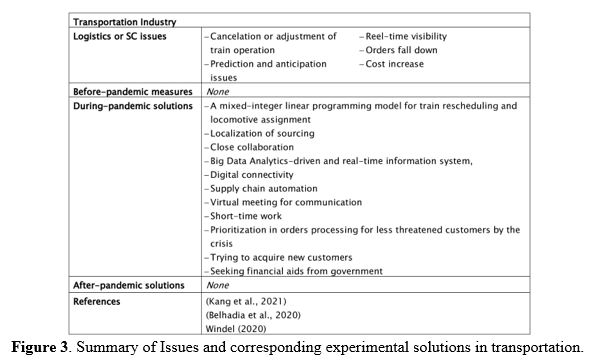
With a mixed-method (questionnaire survey and semi-structured interview), Belhadia et al., (2020) identified significant response strategies both in the short and long-term employed in 145 companies to sustain their supply chain resilience face to disruption following Covid-19 pandemic in the automobile and airline industry. The findings relate that the most used response strategies to Covid-19 by practitioners in the automobile industry to maintained SCRE have been localization / regionalization of sourcing, Big Data Analytics-driven and real-time information system, digital connectivity, supply chain automation, social supply chain focus and integrated supply chain risk management. Whereas business continuity plans, Big Data Analytics-driven and real-time information system, virtual marketplaces, and social supply chain focus were found to be the most preferred response strategies by the practitioners in the airline industry. The most valuable findings are from the qualitative study via a semi-structured interviews focused on long-term response strategies. The analysis reveal practitioners reacted in the long term perspective by developing predictive or anticipative capabilities. They invested to enhance their ability to evaluate and identify potential threats among the supply chain. The focus was on Digital driven data analysis capabilities (e.g. the use of Big Data Analytics), and Human awareness capabilities (e.g. sensitization of the crisis impacts on SCRE). Practitioners have adopted main reactive strategies such as Lifeline and transportation system, Emerging technologies, Supply chain collaboration. They have also adopted and testify necessary the following proactive strategies: Digital transformation, Integrated risk management, and Corporate Social Responsibility. The above proactive strategies improve real-time visibility along the supply chain, holistic supply chain risk management, taking into account social entities (institutions) which influence businesses through their decisions.
The use of technologies mentionned above has been supported in the case study of Rapaccini et al., (2020) in Northern Italy. Companies which have been more resistant to Covid Crisis logistically have been those who engaged themselves into digitization and (digital) servitization. That has consisted in introducing digital technologies such as industrial internet, product remote control, and predictive maintenance. A manager pointed out, “Most of our machines are connected to our platform. I can see if they are operating …[and] I can access their firmware, run diagnostics routines, check their status, and solve some problems remotely” (Rapaccini et al., 2020). Servitization is the transition from a product-centric business logic, focusing on selling products, to a more service-oriented business logic that focuses on providing advanced product-associated services and solutions that better fulfill customers’ needs. Digital servitization has consisted in a definite company in creating an interactive video course to train its customers in basic operations and maintenance procedures.
Approaches identified in the reseach of Margherita & Heikkilä remain within the framework of the use of new technologies. Margherita & Heikkilä (2021) reviewed extant approaches on business continuity and organizational resilience in emergency scenarios. Approaches were the answers (published on web pages and LinkedIn network) of the first 50 Fortune “Global 500” companies to the Covid-19 emergency. One of the 5 sub-area of business continuity addressed in this study, namely “Operations and Value System”, was related to supply chain resilience. To face the shift in customer demand entailed by Covid-19 and its impact on the supply chain, case companies undertook actions consisting in identifying and measuring risks, and envisioning a possible future. They get used to assess the overall impact of the crisis on operations, to define scenarios of demand and sales evolution using of advanced analytics and business intelligence systems. To face the limitation of flows of people and products, companies enhanced digital connectivity across the supply chain and proceeded to reengineer inventory/warehousing and order management processes to optimize routes and to reduce risks. Beyond the solutions classified as strategies, the literature provides logistics practices that have been proved successful for some companies in coping with pandemics. For instance, Orlando et al. (2021) studied the role played by innovation and knowledge preparedness in maintaining logistics performance of companies of European Union. Knowledge preparedness refers to the readiness or capability of an organism, through knowledge creation and use, to prevent, detect and respond to unpredictable and harsh outbreaks (Kandel et al., 2007). The results showed that continuous innovation process implemented by companies before Covid- 19 has strengthened their knowledge preparedness (knowledge acquisition, generation, and combination capabilities) which in turn has preserved their supply chain performance during
the pandemic.
Another interresting discovered practice is the one studied by Choi (2020): a real innovation case in Hong Kong facing related Covid-19’s logistical issues particularly the limitation of individual’s mobility. This innovation is a solution for businesses who in normal time deliver their products or service in a static place. The innovation consisted in moving from static operation mode to mobile operation mode. To become mobile service operator, a private music school teaching piano skills rents a long truck, renovates it and makes it a mobile classroom establishing the “bring-service-near-your-home” business model. Hence, the private music school was able to directly move to the student’s home (or very near) and let students attend piano lessons conveniently. Via an analytical study, the authors determined the success conditions of each one of the both operation modes. Their analytical model is made of main variables (such as consumers’ psychological worry, operation cost, demand) and can be used in service sectors other than the case studied.
Other practices to be presented are those discovered by Windel (2020) in a multiple case study of 4 companies in Covid-19 context with the purpose to know measures they used to strengthen their supply chain resilience. Resilience challenges and corresponding responses by companies differ sometimes depending on their sector (automation, aviation, e-commerce, electronic). Common measures can be noticed such as: introducing multiple sourcing, holding safety stock, maintaining close contact with the suppliers, inventory management to face supply and transport issues (shortage due to supplier shutdown or closure). On the hand of production logistics issues (mainly labor shortages), companies commonly applied measures such as setting hygiene measures, flexible/adaptable operations (home office, process
reconfiguration, etc.), managing orders (by prioritization of orders of the less threatened customers by the crisis, postponement, etc.), and adapting capacity (reallocation of production, redundant capacity, adapting capacity to demand, etc.), flexible facilities (building tent to increase spaces). Supply side issues have been responded by dispersion of markets diversified product/ customer portfolio, flexible distribution (multiple channels), customer management (trying to acquire new customers). The information flow management has required measures such as collaboration, information transparency, information sharing, real time monitoring and IT infrastructure.
- Response tools to logistics and SC issues arising from pandemics
Many authors (Ivanov, 2020; Kang et al., 2021) have developed or tested decision-making oriented tools or simulation models that can be used elsewhere. These tools have been tested in real supply chain or logistics cases from which lessons have been learned.
The first decision-making oriented tool or method to be presented is the less recent one in respect with the time-period covered by the research. This is specifically a combination of Operational Research (OR) models that Larson et al. (2013) used to evaluate the effectiveness of vaccine allocation in the context of pandemic influenza that occurred in 2009. OR consists in conceptualizing and implementing mathematical models helpful for decision maker to find the solution offering the optimal results. The study was carried out in 2013 and relied on data collected from a sample of 11 states of USA. The models employ discrete-time equations and consider parameters such as the infection spread, the number of infections, the number of vaccines administrated and estimate the number of infections averted as the effect of vaccine program executed by the state. The results show that for many states, the vaccines arrived far too late to be useful. Therefore, the authors concluded that early vaccines are significantly more effective than late vaccines and vaccines administration has a higher acceptance rate in the population when it takes place earlier in the beginning of the epidemic.
The second tool to be presented is developed by Dmitry Ivanov & Das (2020). Thanks to a simulation made up of 3 scenarios, they analyzed the impact of Covid-19 pandemic on a global SC that has China located upstream facilities. This research came up with helpful conclusions and suggestions for SC resilience in time of pandemics: 1) stockpiling as a risk mitigation measure can help only for a short-run, at the beginning of an epidemic; 2) backup suppliers and subcontracting facilities are not long-term solution because of regional, national or continental lock-downs and quarantines during the pandemics; 3) Therefore authors advocate a situational response to real-time changes as a SC resilience management instead of a building proactive redundancies; 4) At the same time, the importance of having proactive plan has been underlined by the authors who advised companies, for more proactiveness, to accurately map product SCs beyond the first or second supply tiers. They can make it thanks to the use of robotics and automated production and distribution systems; 5) the simulation suggests timing the closing and opening of the facilities at different SC echelons, in as much as possible, as one way to avoid such SC paralysis.
A similar tool has been developed by Kang et al., (2021) that they tested in rail transport. It is an exact mixed-integer linear programming model for train rescheduling and locomotive assignment problem during Covid-19 time. The rational use of locomotives maximizes the benefits of locomotive operation, saving maintenance costs, various labor, and management costs. The proposed model and algorithms were tested with the case of Beijing-Tianjin intercity railway. The numerical results indicate that train rescheduling parameters should be properly set to improve locomotive turnover efficiency.
Authors simulation model tools can be found in the literature which are used with software. Dmitry Ivanov (2020) has developed a simulation model that can predict the operative and long-term impacts of epidemic outbreaks on the SCs and develop pandemic SC plans. It can
help to identify the successful and wrong elements of risk mitigation/preparedness and recovery policies in case of epidemic outbreaks. The simulation test with anyLogistix has been carried out upon the supply chain of a company selling lightning equipment and made up with suppliers, factory, distributions centers (DC), and customers located in different geographic zones. The major discovery of that simulation is that “the timing of the closing and opening of the facilities at different echelons might become a major factor that determines the epidemic outbreak impact on the SC performance rather than the disruption duration or the speed of epidemic propagation.” According to the explanation of the author, this is so because the ripple effect in the supply chain is stemmed when the facility recovery at different echelons in the SC is synchronized in time.
As for Burgos & Ivanov (2021), they used digital-twin namely anyLogistix SC simulation and optimization software to simulate the impacts of Covid-19 pandemic on German Food retail sector. They end up recommending the use of technologies such as big data analytics, blockchain, and collaborative SC platforms, digital twin that enhance end-to-end visibility of the SC. That helps to understand disruptions and conduct specific actions based on existing priorities. Digital SC twins are defined as ‘computerized model that represents the network state for any given moment in time’ (Ivanov et Dolgui, 2021). Compared to simulation models, digital twin has a higher complex system, works with updated data through real-time connectivity with external systems and databases, and is more integrated into decision-making than simulation models. Thanks to those advantages of digital twin, anylogistix digital twin has been proven as an effective tool to manage SCRE during outbreak (Aldrighetti et al., 2021; Dolgui et al., 2020; Ivanov, 2017, 2021), because it allows to evaluate the impact of different progress scenarios of the outbreak in order to anticipate, respond to immediate challenges and seize opportunities earlier.
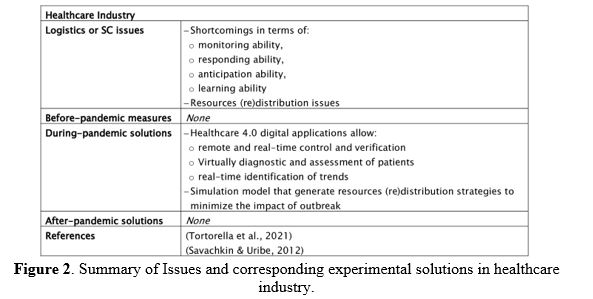
Moreover, a set of advanced technologies called industry 4.0 has been tested. Tortorella et al., (2022) performed a multiple case study in Brazil on the contribution of healthcare 4.0 digital applications to the resilience of healthcare organizations (public and private sector) during the Covid-19 outbreak. The term Healthcare 4.0 refers to the use of new Information Communication Technologies (ICTs) from Industry 4.0, e.g., big data, cloud computing, and Internet-of-Things to support and facilitate health sector (Elhoseny et al., 2018; Yi et Cai, 2018). Such ICTs promote digitization and interconnectivity of processes, products, services, and people (Koh et al., 2019). The findings are very interesting as those applications enhanced the supply chain resilience abilities (monitoring ability, responding ability, anticipation ability and learning ability) of the case hospitals. During the pandemic implications (social distancing measures), the adoption of H4.0 digital applications allowed case hospitals to remotely and real-timing control and verify the status of materials and equipment, as well as to virtually assess the condition of patients. In terms of anticipation ability, the adoption of H4.0 digital applications have made possible real-time identification of trends in materials, equipment, medical consumables and adjusting the inventory in real-time. H4.0 digital applications such as “digital platforms for collaborative sharing of information”, “patient real-time information recorded in electronic database”, and “secure patient data sharing systems” have been revealed as proper solutions for information sharing and following up of diagnosed or in undergoing treatment patients. In short, such supply chain resilience benefits that have been recorded form H4.0 during the crisis are: -remote monitoring of vendor managed inventory – upstream/downstream integration through a common ERP -digital platforms facilitate supplier relationship management.
The last tool to be presented from the present literature is a dynamic optimization model developed by (Savachkin et Uribe, 2012). It is designed for generating resources (re)distribution strategies. It allows redistributing the resources remaining from previous allocations in response to changes in the pandemic progress. It aims at minimizing the impact of ongoing outbreaks and the expected impact of potential outbreaks, considering measures of morbidity, mortality, and social distancing, translated into the societal and economic costs of lost productivity and medical services. The model was simulated in the case of the Influenza outbreak on four counties in the state of Florida, U.S. with over four million inhabitants. Logistics and Supply chain issues risen from pandemics and corresponding solutions found in the literature are recapitulated in figures 1, 2, 3 and 4.

Analysis
The purpose of this paper is, on one hand, to share solutions implemented in the world with satisfactory outcomes, to help practitioners to cope with the ongoing Covid-19 pandemics, and on other hand to help them react properly in future pandemics. At the end of the research, an analysis of the findings brings out some remarkable points. It can be noticed that implemented solutions address the following main issues: stock shortage in supply logistics side; overemployment, labor shortage, productivity decrease, lead times increase, additional costs / cost increase in inbound logistics side; panic buying behaviors / shift in customer demand, closure of « on-site service » companies (such as restaurants, cafés, bars, and hotels) within distribution logistics processes. In the overall supply chain, issues encountered are related to the ripple effect, assessing the impact of different progress scenario of the outbreak, unpredictability of the effects of the outbreak and response scenarios, real-time visibility, movement restrictions, disruptions to transportation networks.
For the first part of the research purpose, solutions experimented in real cases (as opposed to conceptual or theoretical solutions) are found and classified as strategies or practices or tools according to the classification of logistics performance drivers done by Kabore & Bourma (2019). Dominant tools are digital-based and focused on decision making. These are precisely simulation models, digital-twin, and industry 4.0 applications designed to solve unpredictability and real time issues as well as the issue of movement restriction to which online platforms attempt to respond. These tools are focused on information flows management in the supply chain, except drone which address goods and material flows. Found strategies (collaboration, multi-sourcing, prefer customership, etc.) are most concerned with supply management (stock-shortages), while found practices (online retailing modes, online platforms) are most related to distribution logistics or supply chain demand side issues. By presenting strategies, practices and tools used around the world and the results of the corresponding experiments, this paper offers practitioners a quick look over solutions implemented elsewhere by their counterparts or competitors. Figure 1, figure 2, figure 3 and figure 4 present the practical and experienced solutions from literature related respectively to food, healthcare, and transportation industries.
Regarding to the second part of the research purpose, the review of empirical cases found in the literature hardly mentions any solution used as pre-outbreak response to logistics and supply chain issues. Demirci (2021), who explicitly studied before-Covid-19 pandemic management within a supply chain found that none of that supply chain members had an actions plan. Only the simulation model of Yazdekhasti et al., (2021) tested in the poultry industry constitutes a pre-crisis management solution. Orlando et al., (2021) mentioned innovation and knowledge preparedness not as an anticipative strategy against the pandemic but as a proxy (antecedent) that mitigated Covid-19’s negative effects on supply chain. Only the company in the electronics sector studied by Windel (2020) possessed before the pandemic a contingency plan, guidelines and protocols to be strictly followed in case of crisis and made use of them when the pandemic started. In results, the resilience of that company was much better than that of others. The scarcity of pre-pandemic solutions to disruption (as it appears in the figures 1, 2, 3 and 4) is a noticeable gap of the current literature, but solutions aiming to enhance visibility and prediction ability can be helpful to anticipate issues from pandemics/epidemics.
The scope of the current research is Covid-19 and similar crises (epidemics / pandemics). But the analysis reveals that solutions are developed most in the context of Covid-19 outbreak. Only two research articles (Larson et al., 2013; Savachkin et Uribe, 2012) dealt with the Influenza pandemic. If previous crises have not led to an intense search for logistics and supply chain solutions, it is surely because they have had less impact upon this area; in this,
the Covid-19 outbreak is one of the biggest disruptions during the last decade (Araz et al.,
2020).
Conclusion
This paper aimed to browse the current literature and list the practical solutions to logistics and supply chain issues in the context of Covid-19 and similar crises. It is a systematic literature review different from others (Chowdhury et al., 2021; Golan et al., 2020) in the fact that it is not focused on scholars with the purpose to help them avoid doing repetitive research, but it targets practitioners much more to give them benchmarking solutions to pandemic-related issues of logistics and supply chain. Solutions found are categorized as strategies, practice and tool, and according to the industry sector for easy use.
One limit of this paper may be that it doesn’t confront the practical (experimented) solutions presented, because at this early current stage of the literature there is not enough studies for such analysis to be undertaken. Comparison with corroborations between many cases validates the effectiveness of the solutions experimented and convinces practitioners to try/adopt them. A solution implemented somewhere with satisfactory results might give inconclusive results if used somewhere else. So, we suggest researchers to conduct later such analysis twice. Another limit of this research concerns the fact that the source of bibliographic resources is not broad enough and could incorporate additional sources. More solutions could be found if other databases have been consulted. (World Health Organization, 2012).
Références bibliographiques
Aldrighetti, R., Battini, D., Ivanov, D. et Zennaro, I. (2021), « Costs of resilience and disruptions in supply chain network design models: A review and future research directions », International Journal of Production Economics, p. 108103.
Anker, T.B. (2021), « At the boundary: Post-COVID agenda for business and management research in Europe and beyond », European Management Journal, Vol. 39, no. 2, p. 171‑178.
Araz, O.M., Choi, T., Olson, D.L. et Salman, F.S. (2020), « Data Analytics for Operational Risk Management », Decis. Sci., Vol. 51 No. 6, p. 1316‑1319.
Belhadia, A., Kamble, S.S., Jose, C., Jabbourc, C., Gunasekaran, A., Ndubisi, N.O. et Venkatesh, M. (2020), « Manufacturing and service supply chain resilience to the COVID-19 outbreak: Lessons learned from the automobile and airline industries », Technological Forecasting & Social Change, p. 120447.
Boulitama, O., Rahli, D. et Sabri, K. (2021), « L’impact de la covid-19 sur la chaine logistique marocaine The impact of covid-19 on the Moroccan supply chain », Ijafame, Vol. 2, no. 3, p. 165‑181.
British Standards Institution. (2014), Supply Chain Impact of 2014 Ebola Outbreak, British Standards Institution, https://www.bsigroup.com/LocalFiles/en– GB/supply-chain-solutions/%0Aresources/WhitepaperEbola_10.14_7.pdf%0A (consulté le 1 novembre 2021).
Burgos, D. et Ivanov, D. (2021), « Food retail supply chain resilience and the COVID-19 pandemic: A digital twin-based impact analysis and improvement directions », Transportation Research Part E, Vol. 152, p. 102412.
Chartier, A. et Landry, M. (2010), « Crisis Management in Information System Projects: Lessons of a Case Study », Canadian Journal of Administrative Sciences, Vol. 27, no. 2, p. 149‑160.
Choi, T. (2020), « Innovative “Bring-Service-Near-Your-Home” operations under Corona- Virus (COVID-19 / SARS-CoV-2) outbreak: Can logistics become the Messiah ? », Transportation Research Part E, Elsevier, Vol. 140, p. 101961.
Chopra, S. et Sodhi, M.M.S. (2004), « Managing risk to avoid: Supply-chain breakdown »,
MIT Sloan Management Review, Vol. 46, no. 1.
Chou, J., Kuo, N. et Peng, S. (2004), « Potential Impacts of the SARS Outbreak on Taiwan’s
Economy », Asian Economic Papers, Vol. 3 No. 1, p. 84‑99.
Chowdhury, P., Kumar, S., Kaisar, S. et Moktadir, A. (2021), « COVID-19 pandemic related supply chain studies: A systematic review », Transportation Research Part E, Vol. 148, p. 102271.
Conz, E. et Magnani, G. (2020), A dynamic perspective on the resilience of firms: A systematic literature review and a framework for future research, European Management Journal, Vol. 38, Elsevier B.V., disponible sur:https://doi.org/10.1016/j.emj.2019.12.004.
Costa, D.G. et Peixoto, J.P.J. (2020), « COVID-19 pandemic: a review of smart cities initiatives to face new outbreaks », IET Smart Cities, Vol. 2, no. 2, p. 64‑73.
Demirci, H. (2021), Resilient Dutch food supply chains before, during and after COVID-19: a case study of an entire supply chain, Faculty of Behavioural, Management and Social Sciences (BMS).
Dolgui, A., Ivanov, D. et Rozhkov, M. (2020), « Does the ripple effect influence the bullwhip effect ? An integrated analysis of structural and operational dynamics in the supply chain », International Journal of Production Research, Vol. 58, no. 5, p. 1285‑1301.
Elhoseny, M., Abdelaziz, A., Salama, A.S., Riad, A.M., Muhammad, K. et Kumar, A. (2018), « A hybrid model of internet of things and cloud computing to manage big data in health services applications », Future generation computer systems, Vol. 86, p. 1383‑1394.
Evans, N. et Elphick, S. (2005), « Models of Crisis Management: an Evaluation of their Value for International Travel Industry », International journal of tourism research, Vol. 7, no. 3, p. 135‑150.
Fan, Y. et Stevenson, M. (2018), « A review of supply chain risk management: definition, theory, and research agenda », International Journal of Physical Distribution & Logistics Management, p. 205‑230.
Golan, M.S., Jernegan, L.H. et Linkov, I. (2020), « Trends and applications of resilience analytics in supply chain modeling: systematic literature review in the context of the COVID ‑ 19 pandemic », Environment Systems and Decisions, Springer US, Vol. 40, no. 2, p. 222‑243.
He, B., Mirchandani, P., Shen, Q. et Yang, G. (2021), « How should local Brick-and-Mortar retailers offer delivery service in a pandemic World ? Self-building Vs. O2O platform », Vol. 154, p. 1‑17.
Hobbs, J.E. (2020), « Food supply chains during the COVID-19 pandemic », Canadian Journal of Agricultural Economics, Vol. 68, no. 2, p. 171‑176.
Hollnagel, E. (2017), « Safety-II in practice: developing the resilience potentials », London.
Hudecheck, M., Siren, C., Grichnik, D. et Wincent, J. (2020), « How companies can respond to the coronavirus [WWW Document]. MIT Sloan Manag, https:// sloanreview.mit.edu/article/how-companies-can-respond-to-the-coronavirus ».
Ibrahim, M.S., Fakharu’l-razi, A. et Aini, M.S. (2003), « A review of disaster and crisis », Disaster Prevention and Management, Vol. 12, no. 1, p. 24‑32.
Illahi, U. et Mir, M.S. (2021), « Maintaining efficient logistics and supply chain management operations during and after coronavirus (COVID-19) pandemic: learning from the past experiences », Environment, Development and Sustainability, Vol. 23 No. 8, p. 11157‑11178.
ISO. (2009), « ISO 31000: Risk Management – Principles and Guidelines ».
Ivanov, D. (2017), « Simulation-based ripple effect modelling in the supply chain »,
International Journal of Production Research, Vol. 55 No. 7, p. 2083‑2101.
Ivanov, D. (2020), « Predicting the impacts of epidemic outbreaks on global supply chains: A simulation-based analysis on the coronavirus outbreak (COVID-19/SARS-CoV-2) case », Transportation Research Part E: Logistics and Transportation Review, Vol. 136, p. 101922.
Ivanov, D. (2021), « Supply Chain Viability and the COVID-19 pandemic: a conceptual and formal generalisation of four major adaptation strategies », International Journal of Production Research, Vol. 59, no. 12, p. 3535-3552.
Ivanov, D. et Das, A. (2020), « Coronavirus (COVID-19/SARS-CoV-2) and supply chain resilience: A research note », International Journal of Integrated Supply Management, Vol. 13, no. 1, p. 90‑102.
Ivanov, D. et Dolgui, A. (2021), « A digital supply chain twin for managing the disruption risks and resilience in the era of Industry », Prod. Plan. Control, Vol. 32, no. 9, p. 775– 788.
Johanis, D. (2007), « How Toronto Pearson International Airport applied lessons from SARS to develop a pandemic response plan », J. Bus. Cont. Emerg. Plan., Vol. 1, no. 4, p. 356– 368.
Kabore, Z. et Bourma, K. (2019), « A la recherche des sources de la performance logistique : proposition d’un modèle conceptuel », Revue Internationale des Sciences de Gestion, Vol. 2 No. 4, p. 515‑536.
Kamalahmadi, M. et Parast, M.M. (2016), « A review of the literature on the principles of enterprise and supply chain resilience: Major findings and directions for future research », Intern. Journal of Production Economics, Elsevier, Vol. 171, p. 116‑133.
Kandel, N., Chungong, S., Omaar, A. et Xing, J. (2007), « Health security capacities in the context of COVID-19 outbreak: an analysis of International Health Regulations annual report data from 182 countries », The Lancet, Vol. 395, p. 1047‑1053.
Kang, L., Xiao, Y., Sun, H., Wu, J., Luo, S. et Buhigiro, N. (2021), « Decisions on train rescheduling and locomotive assignment during the COVID-19 outbreak: A case of the Beijing-Tianjin intercity railway », Decision Support Systems, Vol. 161, p. 113600.
Koh, L., Orzes, G. et Jia, F.J. (2019), « The fourth industrial revolution (Industry 4.0): technologies disruption on operations and supply chain management », International Journal of Operations & Production Management, Vol. 39, no 6/7/8, p. 817-828.
Kohn, S., Eaton, J.L., Feroz, S., Bainbridge, A.A., Hoolachan, J. et Barnett, D.J. (2012), « Personal disaster preparedness: an integrative review of the literature », Disaster medicine and public health preparedness, Vol. 6, No. 3, p. 217‑231.
Kumar, B. et Sharma, A. (2021), « Managing the supply chain during disruptions: Developing a framework for decision-making », Industrial Marketing Management, Vol. 97, p. 159‑172.
Kumar, R. et Mishra, R.S. (2020), « COVID-19 Global Pandemic: Impact on Management of Supply Chain », International Journal of Emerging Technology and Advanced Engineering, Vol. 10, no 4, p. 132-139.
Kumar, S. et Chandra, C. (2010), « Supply chain disruption by avian flu pandemic for US companies: a case study », Transportation Journal, Vol. 49, no. 4, p. 61‑7.
Larson, R.C., Teytelman, A. et Finkelstein, S. (2013), « Operations Research and Homeland Security: Overview and Case Study of Pandemic Influenza », Handbook of Operations Research for Homeland Security, p. 25‑43.
Margherita, A. et Heikkilä, M. (2021), « Business Continuity in the COVID-19 Emergency: A Framework of Actions Undertaken by World-Leading Companies », Business Horizons, Kelley School of Business, Indiana University, Available on: https://doi.org/10.1016/j.bushor.2021.02.020.
Melnyk, B.S.A., Closs, D.J., Griffis, S.E., Zobel, C.W. et Macdonald, J.R. (2014), « Understanding Supply Chain Resilience », Supply Chain Management Review, Vol. 18.
Moher, D., Liberati, A., Tetzlaff, J. et Altman, D.G. (2009), « Academia and Clinic Annalsof Internal Medicine Preferred Reporting Items for Systematic Reviews and Meta Analyses »: Annals of Internal Medicine, Vol. 151 No. 4, p. 264‑269.
Moonen, D.J.T. (2020), The impact of COVID-19 on preferred customership: a multiple case study with four companies, University of Twente, available on: http://essay.utwente.nl/81875/.
Mussell, A., Bilyea, T. et Hedley, D. (2020), « Agri-Food Supply Chains and Covid-19: Balancing Resilience and Vulnerability », Agri-Food Economic Systems, p. 1‑6.
Natarajarathinam, M., Capar, I. et Narayanan, A. (2009), Managing supply chains in times of crisis: A review of literature and insights, International Journal of Physical Distribution & Logistics Management, Vol. 39, Available on: https://doi.org/10.1108/09600030910996251.
Norrman, A. et Wieland, A. (2020), « The development of supply chain risk management over time: revisiting Ericsson », International Journal of Physical Distribution and Logistics Management, Vol. 50, no. 6, p. 641‑666.
Oguzhan, K. et Erol, S. (2016), « A proactive approach to supply chain risk management: Shifting orders among suppliers to mitigate the supply side risks », Journal of Purchasing and Supply Management, Vol. 23, no. 1, p. 54‑65.
Oliveira, U.R. de, Espindola, L.S. et Marins, F.A.S. (2017), « Analysis of supply chain risk management researches », Gestão & Produção, Vol. 25, p. 671‑695.
Orlando, B., Tortora, D., Pezzi, A. et Bitbol-saba, N. (2021), « The disruption of the international supply chain: Firm resilience and knowledge preparedness to tackle the COVID-19 outbreak », Journal of International Management, Vol. 28, no 1, p. 100876.
Paul, S. et Venkateswaran, J. (2020), « Designing robust policies under deep uncertainty for mitigating epidemics », Computers & Industrial Engineering, Vol. 140, p. 106221.
Pavlov, A., Ivanov, D., Werner, F., Dolgui, A. et Sokolov, B. (2019), « Integrated detection of disruption scenarios, the ripple effect dispersal and recovery paths in supply chains », Annals of Operations Research, https://doi.org/10.1007/s10479-019-03454-1.
Ponomarov, S.Y. et Holcomb, M.C. (2013), « Understanding the concept of supply chain resilience », The International Journal of Logistics Management, Vol. 20, no 1, p. 124‑143.
Queiroz, M.M., Ivanov, D., Dolgui, A. et Wamba, S.F. (2020), Impacts of epidemic outbreaks on supply chains: mapping a research agenda amid the COVID ‑ 19 pandemic through a structured literature review, Annals of Operations Research, available on: https://doi.org/10.1007/s10479-020-03685-7.
Rapaccini, M., Saccani, N., Kowalkowski, C., Paiola, M. et Adrodegari, F. (2020), « Navigating disruptive crises through service-led growth: The impact of COVID-19 on Italian manufacturing firms », Industrial Marketing Management, Elsevier, Vol. 88, p. 225‑237.
Ribeiro, J.P. et Barbosa-povoa, A. (2018), « Supply Chain Resilience: Definitions and quantitative modelling approaches – A literature review », Computers & Industrial Engineering, Vol. 115, p. 109‑122.
Sarkis, J. (2020), « Supply chain sustainability: learning from the COVID-19 pandemic », Vol. 41, no 1, p. 63‑73.
Savachkin, A. et Uribe, A. (2012), « Dynamic redistribution of mitigation resources during influenza pandemics », Socio-Economic Planning Sciences, Elsevier Ltd, Vol. 46 No. 1, p. 33‑45.
Schiele, H. (2012), « Accessing Supplier Innovation By Being Their Preferred Customer », Research-Technology Management, Vol. 55, no. 1, p. 44‑50.
Schiele, H., Zachau, T. et Hüttinger, L. (2011), « Das „Preferred- Customer “-Konzept – Lieferantengunst als strategische Größe im Einkauf », Marketing Review St. Gallen, Vol. 28, p. 20‑25.
Sharma, A., Adhikary, A. et Borah, S.B. (2020), « Covid-19’s Impact on Supply Chain Decisions: Strategic Insights for NAS- DAQ 100 Firms using Twitter Data », Journal of Business Research, Elsevier LTD, https://doi.org/10.1016/j.jbusres.2020.05.035.
Simba, S., Niemann, W. et Agigi, A. (2017), « Supply chain risk management processes for resilience: A study of South African grocery manufacturers », Journal of Transport and Supply Chain Management, Vol. 11, no. 1, p. 1‑13.
Singh, C.S., Soni, G. et Badhotiya, K.G. (2019), « Performance indicators for supply chain resilience: review and conceptual framework », Journal of Industrial Engineering International, Vol. 15, no. 1, p. 105‑117.
Sreedevi, R. et Saranga, H. (2017), « Uncertainty and supply chain risk: The moderating role of supply chain fl exibility in risk mitigation », International Journal of Production Economics, Vol. 193, p. 332‑342.
Tortorella, G.L., Fogliatto, F.S., Saurin, T.A., Tonetto, L.M. et Mcfarlane, D. (2022), « Contributions of Healthcare 4.0 digital applications to the resilience of healthcare organizations during the COVID-19 outbreak », Technovation, Vol. 111, p. 102379.
Vo, T.L.H. et Thiel, D. (2006), « A System Dynamics Model of the Chicken Meat Supply Chain faced with Bird Flu », University of Nantes, Nantes, France.
Vos, J.B.H.V.B. et Dewulf, G. (2015), « Antecedents and benefits of obtaining preferred customer status Experiences from the Dutch construction industry », International Journal of Operations & Production Management, Vol. 35, No. 2, p. 178-200.
Wieland, A. et Wallenburg, C.M. (2012), « Dealing with supply chain risks Linking risk management practices and strategies to performance », International Journal of Physical Distribution & Logistics Management, Vol. 42, no. 10, p. 887‑905.
Windel, T. (2020), Identification and analysis of traditional and non-traditional measures to strengthen the risk resilience of supply chains in the Corona Pandemic 2020, Berlin School of Economics and Law.
Winkler, A. (2021), « COVID-19: Lockdowns, Fatality Rates and GDP Growth Evidence for the First Three Quarters of 2020 », Intereconomics, Vol. 56, no. 1, p. 32‑39.
Wong, G., Liu, W., Liu, Y., Zhou, B., Bi, Y. et Gao, G.F. (2015), « MERS, SARS, and
Ebola: The Role of Super-Spreaders in Infectious Disease », Cell Host and Microbe, Vol. 18, no. 4, p. 398‑401.
World Health Organization. (2012), Activity report, World Health Organization.
Xu, S., Zhang, X., Feng, L. et Yang, W. (2020), « Disruption risks in supply chain management: a literature review based on bibliometric analysis », International Journal of Production Research, Vol. 58, no. 11, p. 3508‑3526.
Yazdekhasti, A., Wang, J., Zhang, L. et Ma, J. (2021), « A multi-period multi-modal stochastic supply chain model under COVID pandemic: A poultry industry case study in Mississippi », Transportation Research Part E, Vol. 154, p. 102-463.
Yi, C. et Cai, J. (2018), « A truthful mechanism for scheduling delay-constrained wireless transmissions in IoT-based healthcare networks », IEEE Transactions on Wireless Communications, Vol. 18, no. 2, p. 912‑925.